



You have a website or an online business and you want to reach people who are searching for what you offer, but you are stuck: should you invest in SEO and wait months for results, or launch a Google Ads campaign and get visits from day one?
This is the question that stops most website owners. In this article, we explain the difference clearly, with practical examples, and help you choose what fits your situation right now: your budget, your timeline, and your goal.
Read on to understand the difference, what to use and when, and which option suits you.
The Core Difference Between SEO and Google Ads
Imagine your website is a shop on a busy commercial street.
- SEO:
Search engine optimization is like building a real reputation for that shop: you improve the storefront, put up a clear and attractive sign, people start talking about you, and gradually customers find you on their own when they look for what you offer. It takes time, often three to six months or more, but once people start coming, they keep coming without you paying every month. The shop becomes known, customers return on their own, and the reputation grows over time.
- Google Ads:
Google Ads campaigns are like renting a large illuminated billboard in the busiest spot on the street. Your name instantly appears above everyone else, people see you, and you get lots of visits within days. But the moment you stop paying, the billboard comes down and the visits disappear immediately, as if you were never there.
That is the difference in essence: SEO builds a strong, long-term foundation, while Google Ads buys fast, targeted visibility.
Neither is better in absolute terms. Your situation decides.
SEO: What Actually Happens When You Invest in It?
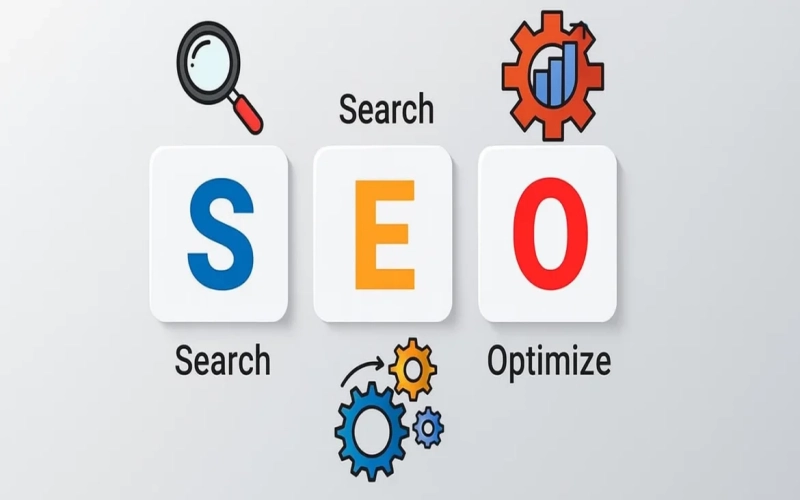
SEO (search engine optimization) is the process of improving your website so it appears in Google’s natural (organic) search results without paying for each click.
According to Google’s official Search Central documentation, SEO is not just about writing keywords. It is a complete system that includes strong content, technical optimization, and building trustworthy links.
What does SEO do, step by step?
Google uses crawlers that discover websites through links and add them to its index. It then evaluates your website based on many factors, the most important being:
- Content: Does your website actually answer the visitor’s question, or is it just generic text? Google favors SEO-friendly articles that add real value, such as detailed guides with examples, case studies, or practical answers. If you write an article about “the best laptop for students in 2026”, it should include a real comparison, updated prices, user opinions, and personal advice, not just a summary of other websites.
- Credibility: Off-page SEO asks whether other trusted websites link to you (backlinks). It is like a recommendation from a friend, and it increases Google’s trust in you. A link from a major, reputable news site can strengthen your rankings.
- Technical experience: Does the site load quickly? Does it work well on mobile? Is it easy to navigate? Google’s documentation notes that good page experience, including Core Web Vitals, is something its ranking systems reward.
What actually happens:
If you do it right, your website appears in the organic results (below the ads) and brings steady, free traffic for years. The top organic results receive the large majority of clicks, which means successful SEO lets you capture a big share of traffic without an ongoing cost per click. For a related topic, see our article on Quality Score in Google Ads.
But there is a big drawback you need to know:
SEO takes time. It can take months before you see noticeable results, and rankings are affected by algorithm updates such as core updates. If you do not have the patience or time, SEO alone will not be enough.
Google Ads: What It Delivers and What You Need to Know
Google Ads is a paid advertising platform (PPC, pay per click), where you pay each time someone clicks your ad.
According to Google’s official site (ads.google.com), Google Ads lets businesses pay to show their ads at the top of search results or on Google’s partner websites, with very precise targeting.
To understand the foundations of this topic, read our complete guide to Google Ads campaign types.
How does Google Ads work, step by step?
The platform works through an auction, which you can manage with Smart Bidding: you choose the keywords you want your ad to appear for (such as “buy a cheap laptop”) and set the maximum amount you are willing to pay per click. If your bid is competitive and your ad is relevant (a compelling headline, a clear description, a strong landing page), your ad appears above the organic results, marked with a “Sponsored” label so users know it is paid.
Google offers very advanced targeting tools:
- Geographic (for example, “Riyadh only” or “all of Saudi Arabia”).
- Demographic (age, gender, household income where available).
- Behavioral (interests and search behavior).
- Time-based (for example, ads during peak hours).
- Retargeting people who have visited your website before.
What actually happens:
Ads bring immediate traffic: launch a campaign today and see clicks and sales tomorrow. Returns depend heavily on the quality of the ad, the landing page, and your margins. If your campaign is well built, it can quickly earn back more than you spend.
But there are drawbacks you need to know:
- When you stop paying, traffic stops immediately. Nothing stays with you.
- Many users recognize ads and some prefer organic results because they trust them more.
- Costs can be high when competition is strong. Insurance, finance, and real estate keywords, for example, often have high cost per click.
A Detailed Comparison: SEO vs. PPC (Google Ads)
Instead of a table, here is a clear, detailed comparison so you can understand the difference in depth and apply it to your project.
1. Cost and investment:
- SEO has no cost per click. You do not pay Google directly, but you invest time and effort in high-quality content, technical optimization, and link building. If you spend months building your website, the result is ongoing free traffic. Organic search is a major traffic source for most websites, so SEO saves money over the long term and builds digital assets that you own.
- Google Ads is 100% paid. You pay per click (CPC) or per thousand impressions (CPM). If your campaign is successful, you can earn more than you spend, but if you stop paying, the traffic disappears. Your return depends on competition, targeting, and conversion rate.
2. Time to results:
- SEO takes time, typically three to twelve months to see noticeable results, because Google needs time to discover and evaluate changes. It suits businesses building a lasting audience, such as blogs or service websites.
- Google Ads is immediate. You launch the campaign and see visits within minutes. It is ideal for seasonal offers or new launches, but the result is temporary and depends on your daily budget.
3. Sustainability:
- SEO is a long-term investment. The rankings you build can last for years, even if you slow down. If your website reaches the first page, it keeps bringing free visits as long as the content stays up to date.
- Google Ads is not sustainable on its own. Results stop as soon as you pause the campaign, so it suits short campaigns, and if you rely on it alone, you pay every day.
4. Placement in search results:
- SEO puts your website in the organic results (below the ads), which builds more trust because many people prefer natural results.
- Google Ads appear at the top with a “Sponsored” label, so visibility is faster, but trust can sometimes be lower because people know they are paid.
5. Targeting and audience:
- SEO targeting is broad. It depends on content quality and keywords, and Google decides who sees you. This suits a wide audience.
- Google Ads targeting is very precise. You choose location, demographics, interests, and even time of day, which is ideal for businesses that want a specific audience, such as “women aged 25 to 35 in Riyadh interested in fashion”.
6. Credibility and trust:
- SEO builds high credibility, because people tend to trust organic results that are not paid.
- Google Ads has moderate credibility. People know it is an ad, but if the ad is good, it can turn visitors into customers quickly.
When Should You Choose SEO?
Choose SEO if:
- Your budget is limited and you rely on free traffic.
- Your business is content-driven (a blog, articles, Q&A).
- You want to build long-term credibility.
- Your business is local (local SEO helps you appear for “near me” searches for free).
A practical example:
If you run a cooking or tech blog, SEO will keep bringing visits to your articles for years without monthly payments. If you write a detailed article on “how to choose a laptop for studying in 2026” and optimize it properly, it can keep attracting visits for years.
When Should You Choose Google Ads?
Choose Google Ads if:
- You need fast results (a seasonal campaign or a new product launch).
- Your profit margin is large enough to cover the cost of clicks.
- You want to test an idea or product quickly.
- You need precise targeting (for example, women aged 25 to 35 in Riyadh interested in fashion).
A practical example:
If you run an online store selling Ramadan outfits, Google Ads can bring sales within days, while SEO would take months.
Can You Combine SEO and Google Ads?
Combining the two is the strategy that wins in the long run:
- Google Ads brings immediate traffic and shows you which keywords turn visitors into customers.
- SEO builds a strong foundation and reduces your reliance on ads over time.
When your website appears in both a paid and an organic result at the same time, people trust you more, which can raise your conversion rate.
In Short: What Should You Use, and When?
SEO builds a strong, long-term foundation, and Google Ads delivers fast, targeted results.
Neither is better in absolute terms. The best option is always the one that fits your situation: your budget, your timeline, and your goal.
Start today:
- If your budget is limited and you can be patient, focus on SEO (you will build a lasting audience).
- If you need fast results and immediate sales, start a small Google Ads campaign (you can test your idea within days).
- If you can, combine both (this is the strategy that wins over the long term).
Sources
- SEO Starter Guide: The Basics، Google Search Central
- Your guide to Google Ads، Google Ads Help