



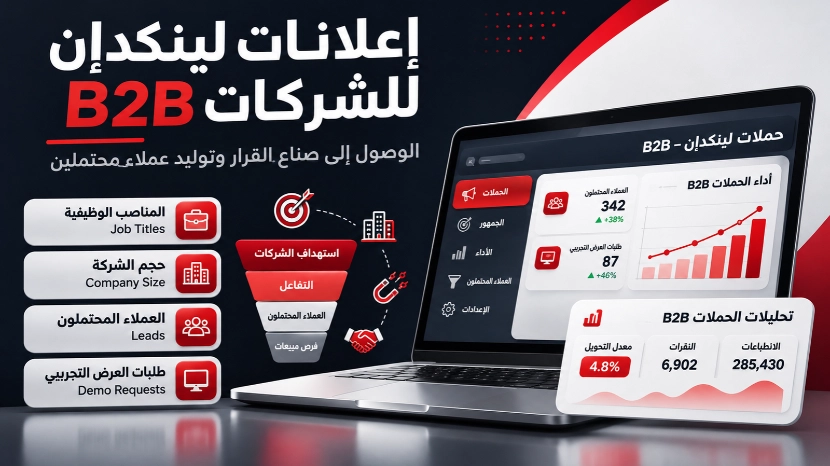
In B2B marketing, the challenge is not reaching as many people as possible. It is reaching the right people inside the right companies. If you offer a SaaS product, a consulting service, a technical solution, or a service aimed at organizations, showing your ad to thousands of users delivers no real value if the sales director, procurement manager, CTO, or whoever influences the buying decision is not among them.
This is where LinkedIn Ads for B2B companies shine. They let you build audiences from professional data such as job title, job function, seniority, company size, industry, and company name, which brings your targeting much closer to your ideal customer profile than general interests alone.
But LinkedIn Ads success is not measured by the cheapest click or the largest number of leads. In B2B, one qualified lead from the right company can be worth more than dozens of low-quality sign-ups. So a campaign should start with understanding who you want to reach, what problem you are solving, and which offer fits each stage of the buying journey, then measuring what happens after sign-up all the way to opportunities and the sales pipeline.
Why Are LinkedIn Ads a Good Fit for B2B Companies?
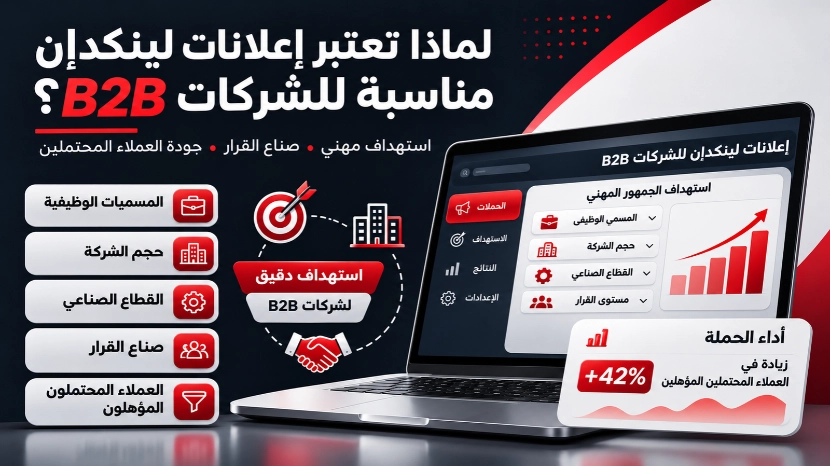
The B2B buying journey differs from most consumer purchases. Several people may be involved, deal values are higher, sales cycles are longer, and customers need more information before deciding. So the right platform should not just bring traffic. It should help you reach the people who actually play a role inside the organization.
1. Targeting with professional data
One of the main reasons to use LinkedIn for B2B is the ability to build audiences from work-related data such as job title, job function, seniority, company size, and industry.
For example, a company offering a sales team management system does not need to target every employee at every company. Its most valuable audience may be sales directors, revenue managers, and operations managers at companies of a certain size and sector.
But precision does not mean using as many filters as possible. Every extra condition narrows the audience. The goal is an audience that reflects your ideal customer, not one so small that the campaign struggles to run.
2. Reaching the buying committee, not just one role
A common mistake is assuming the CEO is the only decision maker. In reality, a project may start with the department head who faces the problem, then involve the technical or finance team, and only then reach senior management as a recommendation.
If you sell a CRM system, for example, the research may start with a sales manager, the IT team reviews integrations, and the CFO focuses on cost and return. So it is best to map the full buying committee and know which message matters to each role in the buying process.
3. A fit for high-value deals
Cost per lead on LinkedIn can be higher than on some other platforms, but comparing on CPL alone can be misleading.
If contract values are high, one qualified lead from the right company may be worth more than many unqualified leads. That is why metrics such as cost per qualified lead, cost per opportunity, and customer acquisition cost matter more than sign-up cost alone.
How to Target Decision Makers with LinkedIn Ads
Good targeting does not start in Campaign Manager. It starts with defining your ideal customer. Before choosing any job title, you need to know which type of company represents a real opportunity for your business, and who inside that company faces the problem or influences the decision.
1. Define your ideal customer profile first
Start by defining the characteristics of your target companies: industry, size, market, type of operations, and potential deal value. If your product is designed for companies with large sales teams, it makes no sense to target very small companies that do not face the same problem. Once you define the ideal company, move on to the people inside it.
2. Job title or job function?
Job title works when you know the titles your audience uses, such as Marketing Director or Head of Sales. But companies often use different titles for the same role, so combining job function with seniority can be more flexible in some campaigns. Instead of targeting one title only, you can target the Sales or Marketing function at Manager or Director level, then review the audience size and quality.
3. Use seniority without overdoing it
Seniority helps you reach managers and leaders, but targeting CXOs only may cut you off from the people who actually do the research and evaluation. In many deals, a director or manager starts the project and convinces senior management. So your targeting should follow how decisions are really made, not assume that the highest title is always best.
4. Company targeting and matched audiences
You can use company name, company size, and industry to reach specific types of companies, and you can use matched audiences to reach website visitors, contacts, specific companies, or users who have already engaged with your content.
Retargeting matters because it lets you show a different message to people who already know your brand. A cold audience can see educational content, while someone who watched a video or opened a form without completing it can see a case study or an invitation to a demo.
Which LinkedIn Ad Formats Suit B2B Companies?
Choose the ad format after defining the goal. No single format suits every B2B campaign. The format you use for thought leadership is not necessarily the best one for generating leads directly.
Sponsored Content and Single Image Ads
These ads appear in the feed and reach your audience while they consume professional content. They can promote case studies, reports, guides, webinars, or demo offers. Single image ads are useful for quickly testing several messages or offers, especially when you want to learn which pain point attracts the most interest.
Video Ads
Video works when you need to explain a complex solution or build trust faster than text can. Use it for a product demo, a customer story, an explanation of a common problem, or content from one of your company’s experts. For technical and complex services, video helps show the value before asking for a conversion.
Document Ads
These suit companies that rely on specialized content for demand generation. Use them to promote a whitepaper, industry report, guide, or checklist, then move the user from content to lead generation. This format is useful because it delivers value before asking the customer for a direct sales step.
Lead Gen Forms
Lead Gen Forms let users submit their details inside LinkedIn without going to an external landing page. The main advantage is fewer steps, but easy sign-up can increase the number of leads without guaranteeing quality, so add qualifying questions when needed without making the form long.
Thought Leader Ads
These help companies extend the reach of content posted by an expert or leader inside the organization. This matters in B2B, because audiences often trust people and expertise more than direct promotional messages from a company page.
LinkedIn’s success with B2B campaigns does not make it the right choice for every audience. If you target a broader consumer audience or rely more on short-form video and discovery, it is worth comparing your LinkedIn strategy with TikTok ad types before splitting your budget across platforms.
How to Build a Successful LinkedIn B2B Campaign, Step by Step
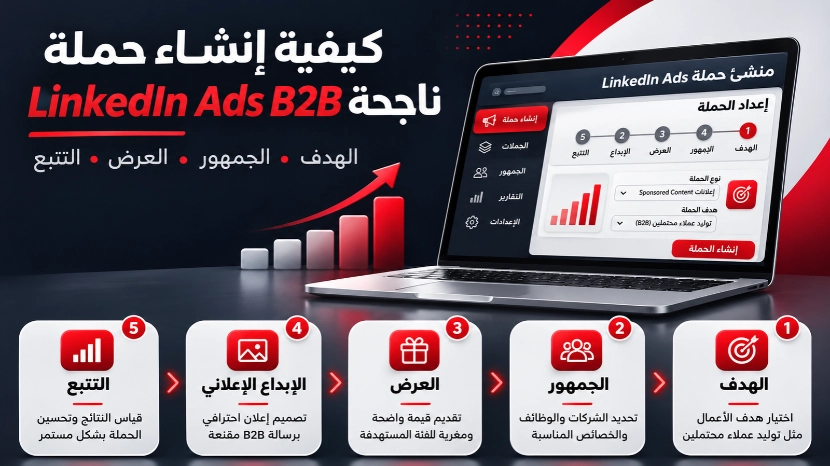
A successful LinkedIn Ads campaign does not start with choosing an ad format or writing copy. It starts with building the campaign around a clear business goal and an audience that has a real chance of becoming customers. In B2B campaigns especially, targeting, offer, message, and measurement must work together, because lots of clicks or leads do not necessarily mean the campaign is producing qualified sales opportunities.
1. Define the business goal and ideal customer before setting up the campaign
Start by defining the result you want clearly. The goal may be building awareness within a specific sector, registering people for a webinar, getting demo requests, or generating qualified leads for the sales team to follow up. Defining the goal first helps you choose the campaign type, the offer, and how to measure success, instead of launching an ad and trying to work out its value afterward.
Next, draw a clear picture of your ideal customer profile (ICP). Define the types of companies that need your service, the industry, company size, and target market, then identify the members of the buying committee who can influence the decision. If a SaaS company offers a sales management system in Saudi Arabia, the right audience may be sales directors, operations managers, and revenue leaders in mid-sized companies in specific sectors.
It is better not to lump every job title into one audience automatically, because what worries a sales director may differ from what an operations manager or CEO cares about. The more you match each segment with a message that fits its needs, the more relevant the ad becomes.
2. Build a precise audience without over-narrowing it
After defining the ICP, build the audience using LinkedIn’s key professional criteria, such as industry, company size, job function, seniority, and job title when needed. The goal is not to use as many filters as possible, but to choose the combination that gets you close to your ideal customer without shrinking the audience too much.
A common mistake is stacking so many targeting conditions that the audience looks perfect on paper but is tiny in practice. This limits the campaign’s reach and its ability to gather data and optimize. Start with the criteria most closely tied to the deal, then monitor audience size and quality before adding more restrictions.
3. Offer a real reason to engage
In B2B advertising, it is not enough to tell your audience you have a good product or service. The manager who sees the ad needs a clear reason to give you their time or contact details.
The offer could be a demo of the solution, a consultation on a specific problem, an audit, a specialized webinar, a case study, or a whitepaper with information that is hard to find elsewhere.
The rule is simple: the bigger the step you ask for, the clearer the value in return must be. Asking for an email to download a report is a relatively low barrier, but if you ask for a meeting with your sales team, the user must understand in advance what they will gain and why it is worth their time.
4. Write the ad around the customer’s problem, not your company
One of the most common reasons B2B ads underperform is that the company talks about itself more than the problem the customer is trying to solve. Phrases like “We are the best sales solutions company” give a manager no strong reason to stop or engage.
It is better to start with a pain point your audience recognizes. If you are promoting a CRM, the message could be: “How many leads does your sales team lose because of slow follow-up?” or “How do you know where deals stall inside your team?”.
This way, the ad moves from promoting the company to opening a problem the customer understands, then presents the product or content as the next step to solve it. The creative, headline, and CTA should all support the same idea, so the user does not feel a gap between the ad and the offer.
5. Set up conversion tracking before launch
Measurement should not start after the budget is spent. Before launching, set up a clear way to see what happens from the moment someone sees the ad until the lead reaches your sales team.
You can use the LinkedIn Insight Tag and suitable conversion tracking, along with UTM parameters to identify traffic sources and campaigns in your analytics tools. Most importantly in B2B, connect leads to your CRM wherever possible, so the data does not stop at form submission.
The real goal is not just knowing how many people submitted the form, but knowing their quality and what happened next: How many leads became MQLs? How many moved to sales and became SQLs? How many meetings were booked? How many turned into real opportunities?
When campaign data reaches this stage, you can evaluate LinkedIn Ads by their contribution to the sales pipeline, instead of making decisions based on CTR or CPL in isolation from business results.
Lead Gen Forms or Landing Page: Which Is Better for LinkedIn B2B Campaigns?
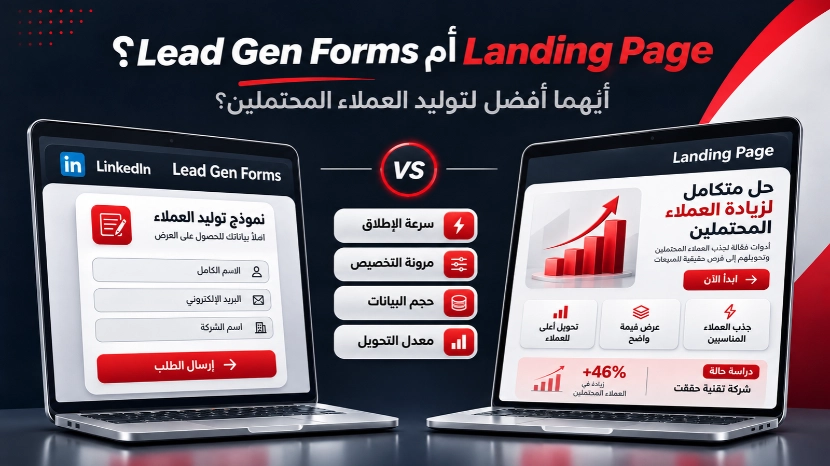
How you collect lead data directly affects the number and quality of leads. In LinkedIn B2B campaigns, neither option is best in absolute terms. Lead Gen Forms reduce sign-up steps, while a landing page gives you more room to explain the offer and qualify the customer before they submit their details. The choice should depend on the type of service, the deal value, and how ready your audience is to take the next step.
When are Lead Gen Forms the better choice?
LinkedIn Lead Gen Forms work well when the offer is clear and the customer does not need to read much detail before signing up, such as a webinar, report, whitepaper, or demo request for a service the audience already understands.
The main advantage is that users can submit their details without leaving LinkedIn, and some fields can be prefilled from their professional profile, which reduces friction and makes sign-up easier. This can increase the number of leads, especially from audiences who do not want to go to an external page and fill in a long form.
But easy sign-up does not necessarily mean higher lead quality. You may get leads who have not learned enough about the service. So track what happens after sign-up, and measure how many leads become MQLs and SQLs, not just how many forms were submitted.
When is a landing page more effective?
A landing page is better suited when the service is complex, needs more explanation, or the deal value is high and the customer needs qualifying before reaching the sales team.
The page gives you room to present the problem, the solution, use cases, case studies, and social proof, and to explain the value the customer will receive before asking for their details. You can also add questions about company size, needs, or project type, which improves the quality of leads reaching your sales team.
A landing page may produce fewer sign-ups than a quick LinkedIn form, but that is not a bad result if a larger share of those leads turn into qualified sales opportunities.
When you have enough data, the best approach is to test both options and compare result quality using SQL rate, opportunity rate, and cost per qualified lead, instead of deciding on CPL alone.
How to Use LinkedIn Ads in an Account-Based Marketing Strategy
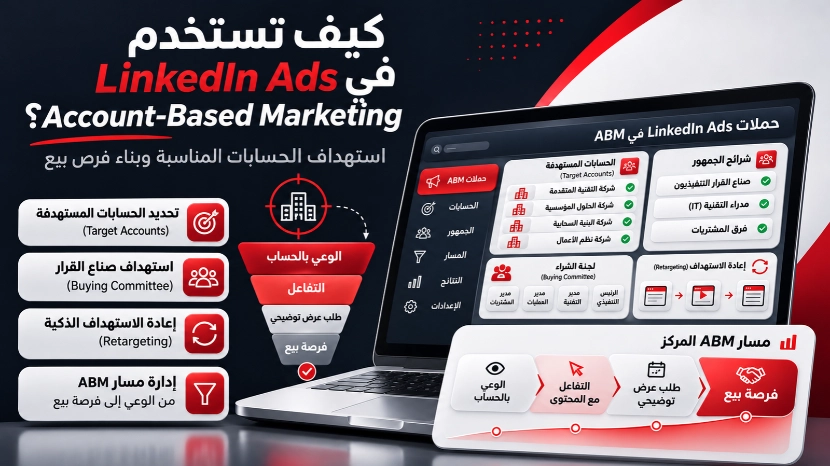
LinkedIn becomes even more valuable in B2B campaigns when your goal is not to reach any potential company, but a defined set of high-value accounts. This is where account-based marketing (ABM) comes in. The strategy starts by defining the target companies first, then building campaigns that reach the people who influence the buying decision inside each one.
Start by defining your target accounts based on criteria such as industry, company size, market, needs, and potential deal value. Then use company targeting and matched audiences to build an audience focused on employees and leaders inside these companies, instead of spreading your budget across a broad audience with weaker ties to the opportunity.
The campaign does not have to start with a direct sales pitch. You can first offer thought leadership or industry insights to build awareness, then retarget people who engaged with a case study, a specialized report, or a demo suited to the next stage of the buying journey. This makes retargeting part of an organized path that gradually moves the target account toward a conversation with your sales team.
Tailor the message to each person’s role in the decision
A key part of ABM success is understanding that buying decisions in companies rarely come from one person. So do not show the same message to every member of the buying committee.
A technical buyer may care about integration, security, and technical details, while an economic buyer focuses on cost and expected return. The actual user of the service looks for ease of use and the impact on their daily work, while an executive sponsor cares about the strategic results the company can achieve.
The campaign becomes stronger when it combines targeting the right account, reaching the right people inside it, and delivering a message tied to each person’s role in the decision. That is when LinkedIn turns from a platform for generic lead generation into a tool for building more precise, more valuable sales opportunities.
How Much Do LinkedIn Ads Cost and How Do You Set the Right Budget?
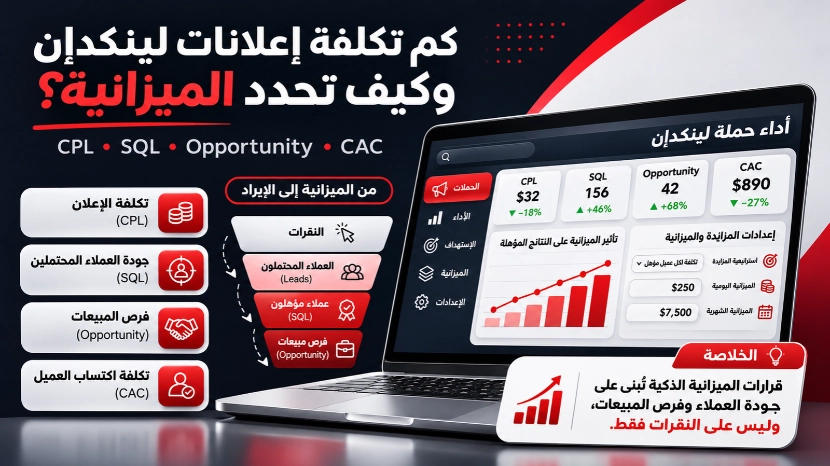
There is no fixed cost that works as an average for every LinkedIn Ads campaign. Price depends on several factors, including the target market, competition for the audience, seniority level, audience size, campaign objective, bidding method, and the quality of the creative and offer.
So it is not advisable to build your budget around an average CPC or CPL quoted in a generic article. A cost per lead that is perfectly acceptable for one company can be too high and unprofitable for another. The most important factor is the value of a customer to your business and how well the campaign generates real sales opportunities.
Tie the budget to deal value, not just cost per lead
In B2B campaigns, it can be perfectly reasonable to accept a higher CPL if the resulting leads fit your ideal customer profile better and can turn into high-value deals.
For example, a lead from a company that matches your target industry and size, held by someone with real influence on the buying decision, may be worth more than several cheaper leads with no clear need or authority.
So do not aim for the lowest sign-up cost. Aim for the best cost per qualified lead.
Which metrics should you watch when evaluating the budget?
Instead of focusing on CPL alone, connect campaign cost to the stages the customer goes through in your sales funnel, and watch these in particular:
- Cost per qualified lead: the cost of a lead that matches your target company criteria.
- Cost per SQL: the cost of a lead that is qualified for serious follow-up by the sales team.
- Cost per opportunity: the cost of creating a real sales opportunity in the pipeline.
- Customer acquisition cost: the total cost of winning a new customer after accounting for every stage.
The closer a metric is to the final business result, the more useful it is for evaluating the campaign.
How do you set a starting budget?
Start from the deal value and your sales team’s typical ability to convert leads into opportunities and customers, then allocate a budget that lets the campaign gather enough data before you judge the results. The goal of the first phase is not maximum lead volume, but learning which audience, message, and offer produce the highest-quality customers.
Once data comes in, gradually shift the budget toward the audiences and messages with the best cost per qualified lead and cost per opportunity, instead of increasing spend on ads that simply get more clicks or sign-ups.
How to Measure LinkedIn Ads Success for B2B Companies
CTR and CPC help you understand ad performance, but they do not tell you whether the campaign is building a real sales pipeline. At the top of the funnel, track reach, impressions, and engagement to see whether your message is reaching the audience.
In the next stage, monitor CTR, landing page visits, and form completion rate to understand how well the ad and offer push users to take a step.
After leads are generated, the real measurement begins:
- Are the companies a good fit?
- Are the job titles right?
- How many leads became MQLs?
- How many became SQLs?
- How many meetings were booked?
- How many opportunities were opened?
Imagine Campaign A generated 100 leads, but the sales team rejected most of them, while Campaign B generated only 30 leads and a good number turned into meetings and real opportunities.
The second campaign may be more successful even with a higher CPL. Although LinkedIn differs from platforms built around fast content, the principles of campaign management are similar: defining the goal, choosing the audience, setting the budget, testing creative, and analyzing results.
You can compare this with the steps for managing Snapchat ad campaigns to see how the tools differ while the core principles of performance marketing stay the same.
How Organic Content Supports LinkedIn Ad Results
LinkedIn ads do not work in isolation from your company’s organic presence on the platform. A user who sees an ad from an unfamiliar brand may visit the company page, the founder’s profile, or one of the company’s experts before leaving their details or requesting a demo, to confirm the company’s expertise and credibility.
If they find an inactive page or weak content that does not reflect real expertise, trust may drop even if the ad itself is good. That is why paid media and organic content work best as one strategy: the ad grabs attention, while organic content proves expertise and builds trust.
Companies can support their campaigns with content such as case studies, industry insights, specialized reports, customer stories, thought leadership, and practical guides that address the problems the target audience cares about. This content helps customers form a clearer picture of the company before contacting sales.
Regular publishing also builds familiarity. The more users see useful content from the company or its experts before seeing an ad, the more ready they are to engage with an offer such as a webinar, whitepaper, or demo. This turns ads from a standalone touchpoint into part of a complete journey that builds awareness, proves expertise, and then generates business opportunities.
A content strategy does not depend on post quality alone. Timing can also affect how often content reaches the right audience. Use our guide to the best times to post on social media when building your content plan, while ultimately relying on your account’s actual data rather than one time slot that is supposedly best for everyone.
Common LinkedIn Ads Mistakes for B2B Companies
A LinkedIn Ads campaign can fail even with good targeting and a suitable budget if the execution is not disciplined. The problem is rarely the platform. It is usually over-narrowing the audience, relying on surface-level metrics, offering something that does not fit the customer’s stage, or not connecting the campaign to sales and CRM data.
The main mistakes to avoid:
- Over-narrowing the audience: too many filters can produce a tiny audience, which limits reach and weakens the campaign’s ability to gather enough data to optimize.
- Targeting a broad audience that does not match your ICP: reaching more people does not mean better results if the companies or job titles do not match your ideal customer.
- Relying on CPL alone: a cheap lead may be unqualified, while a more expensive lead may be more likely to become an SQL or a real opportunity.
- Asking a cold audience to buy directly: for complex deals, it may be better to offer a case study, whitepaper, or content offer first instead of starting with a meeting invitation.
- Ignoring the buying committee: focusing on one role may mean missing other people with real influence on the decision, such as the technical, finance, or operations lead.
- Not connecting LinkedIn to your CRM: if you do not track the lead source and what happened after sign-up, it is hard to know whether the campaign is actually contributing to the sales pipeline.
- Neglecting retargeting: most B2B customers do not convert after one interaction, so retarget people who viewed your content, opened your form, or visited your website with more advanced messages.
- Not testing creatives and messages: relying on one ad for the whole campaign stops you from learning which angle or offer works best.
A Practical Example of a LinkedIn B2B Campaign
Suppose a SaaS company offers a CRM system for companies in Saudi Arabia. Its goal is to reach companies with sales teams that struggle with weak lead follow-up and opportunities slipping away before deals close.
The ICP is defined as mid-sized companies in specific sectors, and the target audience includes sales directors, operations managers, and revenue managers, as the roles most closely tied to lead management and tracking sales stages.
Instead of starting the campaign with a direct ad such as “Book a CRM demo”, you can build a more effective journey that starts with content addressing the problem itself.
- Attention stage: use a document ad titled “7 reasons your sales team loses leads before closing the deal”, offering useful content that attracts people who really face the problem.
- Lead generation stage: after users engage with the content, use a Lead Gen Form to download the full guide or request a demo, collecting the basic details that help assess fit.
- Retargeting stage: people who saw the ad or opened the form without completing it can be retargeted with a more advanced message, such as a case study or a demo tied to the problem they showed interest in.
- Qualification and sales stage: leads move into the CRM, where they are evaluated by company, size, job title, and need, and qualified leads are passed to the sales team for follow-up.
The campaign journey becomes:
Ad → Content → Lead → Qualification → Sales Meeting → Opportunity
The difference is that the goal is not just collecting contact details, but building a clear path that turns initial interest into qualified opportunities whose impact can be measured in the sales pipeline.
Frequently Asked Questions About LinkedIn Ads for B2B Companies
Are LinkedIn Ads suitable for B2B companies?
Yes, especially for companies targeting a professional audience or specific companies and sectors. But they are not automatically the best choice for every business, so evaluate customer value and the nature of your audience before investing.
What are the best LinkedIn ad formats for companies?
It depends on the goal. Single image ads suit tests and clear offers, video ads suit explanations, document ads suit specialized content, and Lead Gen Forms reduce sign-up steps.
How do I target decision makers on LinkedIn?
Start by defining your ICP and buying committee, then use job function, job title, seniority, company size, and industry to reach the right roles without over-narrowing the audience.
Are LinkedIn Ads more expensive than Meta Ads?
Cost per lead or click can be higher in some cases, but the right comparison in B2B depends on lead quality and deal value, not cost per click alone.
Lead Gen Form or landing page?
A Lead Gen Form works when you want to reduce sign-up steps, while a landing page is better when you need to explain the service or qualify users more deeply.
What is account-based marketing on LinkedIn?
It means targeting a defined set of high-value companies, then reaching the influential people inside them with content and messages suited to each person’s role in the buying decision.
How do I measure lead quality?
Review company fit, job title, need, and level of influence, then track each lead’s progress to MQL, SQL, and opportunity instead of judging it at form submission.
Is LinkedIn suitable for small businesses?
It can be, if the company targets a clear professional audience and customer value justifies the cost of reaching them. But it is not necessary for every small business.
Conclusion
The success of LinkedIn Ads for B2B companies does not depend on reaching the largest audience or getting the cheapest lead. It depends on defining your ICP, understanding the buying committee, choosing an offer that fits the customer’s stage, and following what happens after sign-up in the sales pipeline.
When you connect targeting, creative, lead generation, retargeting, CRM, and sales follow-up in one journey, LinkedIn Ads turn from a channel for collecting clicks and forms into a real tool for building qualified, measurable sales opportunities.
Sources
- Get Started with LinkedIn Ads، LinkedIn Marketing Solutions