





In a world where the smartphone has become the first guide for everyday decisions, the way customers search for services and businesses has changed completely. When someone needs a doctor, a restaurant, a café, or a car repair shop, the first thing they do is type phrases like “near me”, “nearest”, or the service name followed by the city or district. This is exactly where local SEO comes in. It is not a traditional marketing tool but a smart link between a customer’s immediate need and your business at the right moment.
Local SEO is a powerful factor in ranking for local searches and appearing in the Google Maps pack. It is the mechanism that turns nearby searches into real calls, actual visits, and customers ready to buy without hesitation. In a competitive market built on proximity, trust, and speed, this guide explains how local SEO works and how to apply it professionally so your service or product appears in front of customers at the decisive moment.
What Is Local SEO?
Local SEO is one of the keys to ranking in search results. It is a specialized strategy for improving a business’s visibility in location-based search results, such as Google Search and Google Maps, so you reach nearby customers at the moment they search for a service or product in their area. Local SEO does not stop at country-level visibility. It focuses on specific cities, districts, and neighborhoods, which makes it a decisive tool for attracting customers who are ready to buy.
Local SEO strengthens your business’s visibility in the free results, especially in the Google Local Pack, while also supporting your website’s ranking in the traditional results (the blue links). Its real power shows when users search for phrases like “near me” or a service name followed by a city name, connecting the searcher’s immediate need directly to your business.
Local SEO mainly benefits businesses that rely on a physical location or local services, such as restaurants, clinics, shops, workshops, and home service providers. It does not just increase visibility. It turns local searches into visits, direct calls, and real customers within your target area.
How to Do Local SEO for Your Business
Building an effective local SEO strategy takes more than one step or random appearances on Google Maps. It needs a clear plan carried out gradually, combining technical work, content, and online reputation. Successful local SEO makes your business visible at the moment a nearby customer searches for your service, and turns that search into real contact and an actual visit. Here are the core steps for doing local SEO professionally and systematically:
1) Create and Optimize Your Google Business Profile
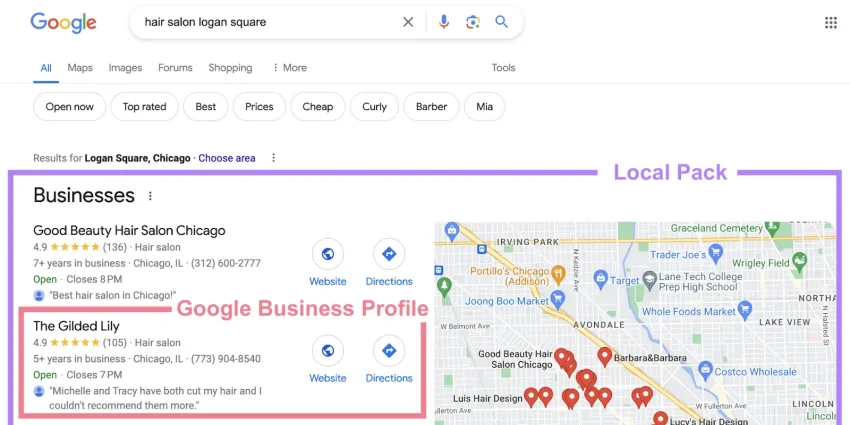
Your Google Business Profile is the foundation of every successful local SEO strategy, because it is the first source Google uses to understand your business, location, and services. Any weakness or gap in the profile directly reduces your chances of appearing in local results.
- Verify ownership of your business: make sure you fully own the profile and verify it, because unverified businesses are less likely to appear and are considered less trustworthy by Google.
- Keep business details accurate and consistent (NAP consistency): your name, address, and phone number must match exactly across the profile, your website, and every other platform. Even small differences confuse search algorithms and weaken trust in your business.
- Choose categories carefully: the right primary category helps Google connect you with relevant searches, while secondary categories add depth to its understanding of your services.
- Enrich the profile with photos and content: businesses that add real photos of the premises, products, and team get more engagement and better click-through rates, which strengthens the profile in local results.
2) Optimize Local Keywords
Local SEO cannot succeed if your website is not set up geographically. Google needs clear signals on your pages confirming where you provide the service and your local coverage.
- Use location-based keywords: instead of targeting generic keywords, connect your service to the target city or area, which helps search engines understand your location and match you with local searches.
- Place local keywords on your main pages: include local keywords naturally in headings, subheadings, meta descriptions, and page content, serving the user first.
- Create dedicated pages for target areas: if your business serves several cities or districts, separate pages for each area improve your chances of ranking and prevent mixed geographic signals.
3) Build Local Presence and Local Backlinks
At this stage, you move beyond on-site optimization to proving your real presence in the local community. Building local presence is where you show search engines that your business is not just a website but a real, active entity in its area.
Google does not rely only on the details you provide. It looks for external signals confirming that you exist, are known, and are mentioned and dealt with locally. The more these signals grow naturally, the higher your business’s prominence and the better its ranking in local results and Google Maps. Key practices include:
- List your business in trusted local directories: appearing in local business directories and specialized service sites strengthens your credibility with Google, as long as your name, address, and phone number are consistent. These signals help search engines confirm your location and the stability of your business.
- Earn links from relevant local websites: links from local sites or partners in the same city or field are among the strongest local SEO signals, because they tie your business to a real geographic context. For a broader view of link building, see our guide on how to build backlinks in 2026 and the main methods for earning strong, safe links.
- Engage with your local community: taking part in local events, initiatives, or partnerships creates natural digital signals about your business, whether through mentions on local news sites or community platforms. This strengthens your prominence and establishes you as a real business in the area.
4) Manage Reviews and Reputation

Customer reviews are not just opinions. They are an important local ranking signal and one of the strongest influences on buying decisions. Google treats engagement with reviews as a sign of business quality and customer care. We covered a related topic in more detail in our article on YouTube SEO.
- Encourage customers to leave genuine reviews: the more natural positive reviews you have, the more Google trusts your business and the better your chances of ranking at the top.
- Reply professionally to every review: responding to both positive and negative reviews shows professionalism and strengthens your image with users and search engines alike.
- Maintain a high, steady rating: recent, regular reviews carry more weight than old ones, so treat review management as an ongoing process, not a one-off task.
Together, these elements raise your business’s value in the eyes of search engines and make it more likely to appear at the top of local searches, especially when competing for keywords with direct purchase intent.
Top Tools for Measuring Local SEO Impact
Measuring local SEO results is just as important as doing the work, because the success of any local strategy depends on tracking performance closely and knowing what actually delivers results. With the right tools, you can track your visibility in local results, understand nearby customers’ behavior, and find opportunities or issues that may be holding back your rankings in Google Maps and local search.
Here are the main tools specialists use to measure local SEO impact:
1. Google Search Console
Google Search Console is the foundation for tracking your website’s performance in search. It shows the local keywords your business appears for, impressions and clicks, and indexing issues or pages that are not showing correctly. This data helps you improve local pages and focus on the keywords that deliver real results.
2. Google Analytics
Google Analytics helps you understand the behavior of visitors coming from local search, such as the pages they engage with, how long they stay, and the actions they take, like calling or submitting a contact form. With this data, you can connect local SEO work to tangible results such as more calls or visits.
3. Semrush
Semrush is used to track your business’s local rankings and compare them with competitors in the same area. It also offers tools to improve your Google Business Profile, analyze local keywords, and find opportunities to outperform local competitors.
To go further, see our articles on improving user experience and real estate SEO.
4. Ahrefs
Ahrefs lets you monitor local backlinks, track brand mentions online, and analyze competitor performance in the same area. It also offers precise local rank tracking to show how your strategy progresses over time.
By using these tools together, you can evaluate local SEO success accurately and make decisions based on real data rather than guesses, which leads to continuous improvement and lasting results.
Common Local SEO Mistakes to Avoid
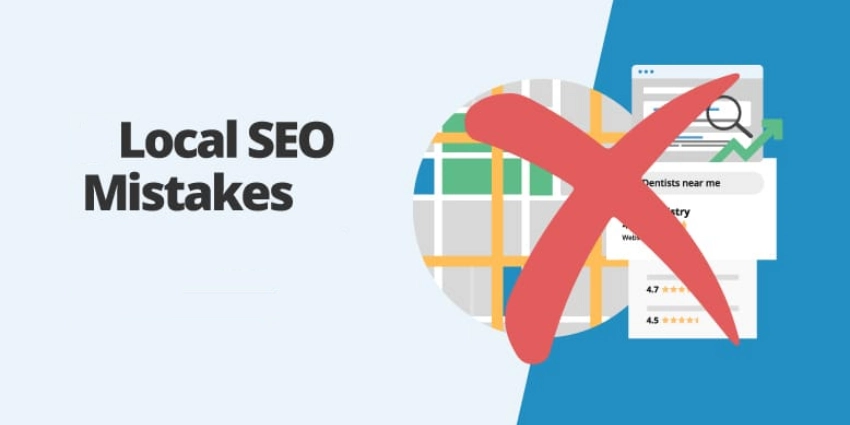
Despite local SEO’s power to attract nearby customers, some common mistakes can cost your business visibility and rankings, and sometimes cause a clear drop in results. Avoiding them is essential for building a strong, lasting local presence:
- Inaccurate or incomplete business information: leaving your Google Business Profile incomplete or not updating details such as address, phone number, or opening hours reduces Google’s trust and weakens your chances in search results and Google Maps.
- Inconsistent NAP data across platforms: different business names, addresses, or phone numbers on your website and directories confuse search engines and hurt credibility, leading to lower local rankings.
- Using generic keywords without location: relying on generic search terms without connecting them to the city or area makes it hard for Google to tie your business to the right location, so you appear less often to local searchers.
- Keyword stuffing: repeating keywords excessively in headings, meta descriptions, or content hurts user experience and sends negative signals to search engines instead of improving rankings.
- Ignoring customer reviews: not responding to reviews, positive or negative, directly affects how new customers see your business and weakens Google’s trust in your brand.
- Relying on weak or untrustworthy backlinks: links from low-quality or unrelated websites can hurt local SEO instead of supporting it and damage your site’s reputation with search engines.
- Poor user experience on the website: slow pages or a website that does not work well on mobile raise the bounce rate and reduce your chances of ranking locally, so pay attention to ways to improve website speed for a better user experience and better visibility.
- No real, attractive photos of the business: not adding professional photos of the premises or products to your business profile reduces engagement and makes your listing less appealing in local results.
Avoiding these mistakes puts your business on the right path to ranking in local search and gives you a trustworthy presence in front of customers at the moment they look for your service.
Why Local SEO Matters for Your Business
Local SEO is a decisive element in the growth of any business that targets customers within a specific area, because it does more than increase online visibility. It connects your business directly with customers who are ready to buy. When your website is set up properly for local search, nearby searches turn into real visits, direct contact, and steady sales, without relying entirely on paid ads.
- Stronger local online presence: local SEO raises your visibility in search results and Google Maps, so your brand is clearly present for people searching for your services in the same area.
- An edge over local competitors: targeting precise local keywords, studying competitors, and appearing before them in purchase-intent searches gives you a clear competitive advantage.
- Closer, more serious customers: your business appears to users who are nearby, and they are the most ready to call, visit, or buy right away.
- Higher conversion rates and sales: local traffic is usually higher quality, because the searcher wants a quick, nearby solution, which directly increases sales.
- More trust and credibility: positive reviews and a professional presence in local results build a trustworthy image with new customers.
- Less reliance on paid ads: local SEO attracts targeted customers naturally and sustainably, reducing advertising costs over the long term.
- Better visibility on Google Maps and Google Business Profile: customers can easily find your location, check your opening hours, and see your services, which increases visits and direct contact.
A Practical Example of Local SEO Success
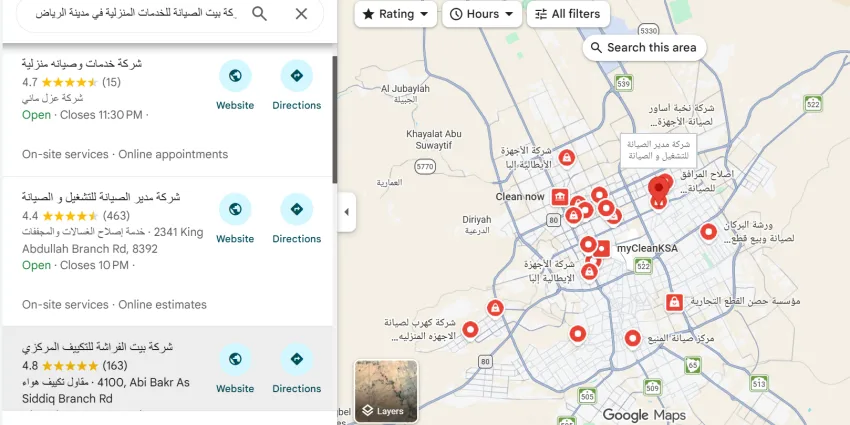
Here is an illustrative example. A home maintenance company in Riyadh noticed fewer calls coming from local search, despite the quality and range of its services. The problem was not the service itself but weak local visibility on Google Search and Google Maps. After a well-planned local SEO strategy, the website’s performance changed clearly within a short time.
What was done?
- The Google Business Profile was optimized by unifying business details, adding real photos of the teams, and updating opening hours and services.
- Customers were encouraged to leave honest reviews after each job, and every review received a professional reply.
- Website speed and the mobile experience were improved to reduce the bounce rate.
- Location-targeted service pages were created, such as “plumber in Riyadh” and “home electrician in North Riyadh”.
- Local links were earned from Saudi business directories and trusted service websites.
The result:
Within three months, calls from local search increased noticeably, and the business appeared among the top Google Maps results for several core services in Riyadh, with a clear rise in requests from nearby districts.
If you are looking for a digital marketing agency that understands local SEO and knows how to turn visibility on Google and Google Maps into real customers, Brand It is the right partner for you in Saudi Arabia.
At Brand It, we treat local SEO as a real growth tool. We help you appear at the moment your customer is searching for your service and turn nearby searches into calls, visits, and sales. Every plan is built around your business, your area, and the competition around you, so you get the best possible results consistently over the long term. If you would rather have these steps handled professionally without spending your own time, explore our SEO services.
Sources
- Tips to improve your local ranking on Google، Google Business Profile Help