





Managing customer data and following up on sales opportunities have become key factors in company growth, especially as communication channels multiply and customers go through more stages before deciding to buy. This is where a CRM system comes in, helping companies organize customer relationships and manage sales and customer service from one platform.
CRM software lets a company keep customer data, log calls and conversations, track leads and deals, assign tasks to the sales team, and produce reports that help management understand performance and make better decisions.
That is why using a CRM in Saudi Arabia has become an important choice for companies that want to manage customers better, organize sales, reduce lost opportunities, and build long-term relationships with their customers.
What Is a CRM System?
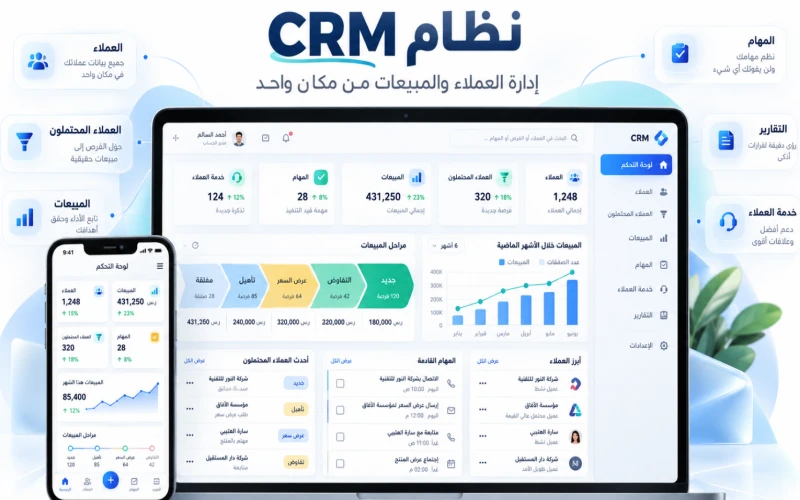
CRM stands for Customer Relationship Management. It is a system that helps companies organize and manage all information and interactions related to current and potential customers.
Instead of scattering customer data across Excel files, emails, calls, and chat apps, a customer relationship management (CRM) system brings this information into a central database that your team can access according to each user’s permissions.
Through the system you can see information such as:
- Customer details and contact methods.
- The lead source.
- The last contact made.
- The employee responsible for the customer.
- The products or services they are interested in.
- The customer’s stage in the sales process.
- Related tasks and appointments.
- Previous quotes and deals.
- The customer’s history with the company.
Brand It offers custom CRM solutions that help companies manage customers, sales, and follow-ups in one flexible system tailored to how they work and what their team needs.
What Is Customer Relationship Management?
Customer relationship management is the strategy companies use to build better relationships with their customers, understand their needs, and improve how they communicate with them. So customer relationship management is not just software. It also covers how you deal with customers, collect their data, analyze their behavior, and improve their experience with your brand.
A CRM system is the technical tool that helps the company apply this strategy in a more organized and transparent way. Customer relationship management includes activities such as:
- Recording customer data.
- Segmenting customers.
- Following up with leads.
- Organizing the sales process.
- Managing communication and correspondence.
- Tracking complaints and inquiries.
- Measuring customer satisfaction.
- Analyzing customer behavior.
- Improving the customer experience.
- Retaining existing customers.
What Are the Tasks of Customer Relationship Management?
Customer relationship management tasks vary from one company to another depending on the business, but they usually include managing customer data, tracking interactions, and improving the customer experience.
A CRM can help with tasks such as recording new customers, assigning an owner to each customer, scheduling follow-ups and calls, tracking open deals, handling complaints, and preparing reports.
It also lets management see which customers have not been followed up, which deals have stalled, conversion rates, and how each member of the sales team is performing.
Key Features of CRM Software
Capabilities vary between CRM systems, but most companies need a core set of functions.
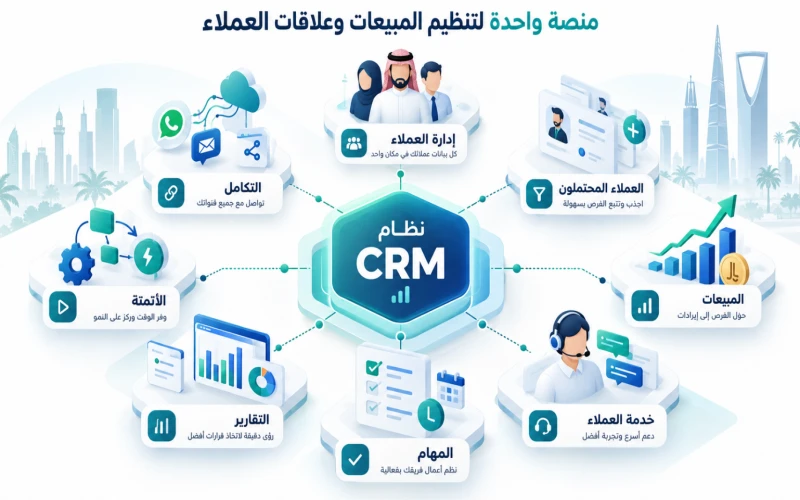
- Customer data management: the system provides a complete profile for each customer with their basic details and all related activity, so employees understand the relationship history before getting in touch.
- Lead management: customer management software records leads from different sources, classifies them, and assigns the employees responsible for following up.
- Sales pipeline management: the sales process can be divided into clear stages such as new lead, contacted, interested, quote sent, negotiation, won, or lost.
- Task and appointment management: a CRM lets you log calls, meetings, tasks, and follow-up dates, reducing the chance of forgetting to contact a customer.
- Reports and dashboards: CRM systems provide reports to track sales team performance, the number of leads, deal values, and conversion rates.
- Automation: some CRM systems automate repetitive tasks such as assigning customers to employees, sending alerts, or updating certain stages automatically.
How Does a CRM Help Increase Sales?
One of the main reasons companies use CRM software is to make the sales team more efficient and better at following up with leads. Instead of salespeople relying on memory or separate files, the system shows a clear list of customers who need follow-up and the current stage of each deal. A CRM increases sales efficiency by:
- Organizing leads.
- Prioritizing follow-ups.
- Logging every contact attempt.
- Tracking deal stages.
- Understanding why deals are lost.
- Measuring conversion rates.
- Spotting stalled opportunities.
- Identifying the best lead sources.
- Tracking sales rep performance.
- Providing clearer forecasts for upcoming sales.
The Role of CRM Software in Improving Customer Service
A CRM is not only for sales teams. It can be a core part of customer service management.
When a customer contacts the company, the employee can see their information and past interactions instead of asking the customer to explain the problem again or provide the same details every time. CRM software can help customer service:
- Log customer inquiries.
- Track complaints.
- Keep a communication history.
- Assign cases to employees.
- Record notes.
- Track the status of a request or issue.
- Respond faster.
What Are the Types of CRM Systems?
CRM systems can be classified into several types based on their main function.
- Operational CRM: focuses on day-to-day sales, marketing, and customer service operations, such as recording customers, tracking deals, and automating some workflow steps.
- Analytical CRM: focuses on analyzing customer data and extracting insights that help management understand performance, behavior, and trends.
- Collaborative CRM: helps teams and departments share customer data and communicate better, so information is available to the right employees instead of staying inside one department.
How to Choose the Best CRM in Saudi Arabia
No single system is the best CRM for every company, because the right system depends on the size of the organization, the type of business, the number of employees, and how sales are managed. Define your company’s requirements before comparing software. The most important points to evaluate when choosing a CRM:
- Ease of use: the more complicated the system, the more likely employees are to resist using it or to enter incomplete data.
- Customization: the system should adapt to your sales stages, fields, and procedures.
- Sales management: it should offer clear tools for managing leads, opportunities, the sales pipeline, and customer follow-ups.
- Reports: make sure management can get the reports and KPIs it needs.
- Automation: an important feature, especially for companies that deal with large numbers of customers.
- Mobile app: a mobile app or mobile-friendly interface can be important for sales teams working outside the office.
How CRM Is Used Across Sectors in Saudi Arabia
A customer relationship management system can be used in many types of business, but the setup differs according to each sector’s workflow.
- CRM for real estate companies: organizes leads, records the projects each customer is interested in, and tracks calls, visits, and bookings.
- CRM for construction companies: helps track customers, business opportunities, quotes, tenders, and the communication linked to each opportunity.
- CRM for online stores: organizes customer data, tracks communication, and supports retention programs depending on the systems it integrates with.
- CRM for clinics and medical centers: solutions suited to the sector can manage communication with clients or patients, while taking into account the nature of the data and the related privacy and protection requirements.
- CRM for service companies: helps service businesses track customer requests, quotes, and the stages before closing a deal.
- CRM for marketing agencies: manages leads coming from campaigns and tracks each customer’s source and the conversion rate of each channel.
CRM vs. ERP
CRM and ERP are sometimes confused, but each has a different core function. CRM focuses mainly on customer-related operations such as sales, marketing, customer service, and opportunity management.
To go further, see our articles on CRM for online stores and CRM for construction companies.
ERP focuses more on the organization’s internal operations, which can include accounting, resources, procurement, inventory, and operations depending on the system. A company may need both, in which case integrating CRM and ERP helps exchange data and reduce duplicate entry.
Protecting Customer Data in a CRM
A customer relationship management system usually holds a large amount of customer data, so data protection should be a core criterion when choosing a system. Important points include:
- Managing user permissions.
- Controlling access to information.
- Securing accounts.
- Backups.
- Logging important activity and changes.
- Clear policies for handling customer data.
- Setting employee permissions according to their roles.
- Reviewing how data is stored and processed.
How to Start Choosing the Right CRM for Your Company
Start by defining what you want to solve instead of starting with a list of software on the market.
Write down your current sales cycle, and define the number of users, lead sources, the tools you need to connect, and the reports you require.
Then compare CRM systems based on real requirements instead of choosing the one with the most features.
The goal is not to have the most complex CRM, but to choose the system your team can use consistently and that helps you manage customers and sales better.
Frequently Asked Questions About CRM in Saudi Arabia
What is a CRM system?
A CRM is a customer relationship management system that helps companies record customer data and track communication, sales opportunities, and customer service from a central platform.
What does CRM system mean?
CRM system stands for Customer Relationship Management system.
Why is customer relationship management important?
It helps organize customer data, improve follow-up, make sales more efficient, improve customer service, and retain customers.
What are the tasks of customer relationship management?
They include recording customer data, tracking communication, managing opportunities, scheduling tasks, following up on complaints, and analyzing sales and customer service performance.
What is the best CRM in Saudi Arabia?
The best CRM is the one that fits your company’s size, sales process, number of users, required integrations, budget, and the level of customization and support you need.
Sources
- What Is CRM (Customer Relationship Management)?، Salesforce
- Data protection laws in Saudi Arabia، DLA Piper